
What to Inspect Before Monsoon Riding
Essential motorcycle checks before riding through Indian monsoon conditions
Monsoon riding in India can be beautiful, unpredictable, and demanding at the same time. Wet roads, poor visibility, potholes, and traffic all combine to create conditions that push both rider and motorcycle harder than usual.
A motorcycle that feels perfectly fine in dry weather can quickly reveal weaknesses once the rain begins.
This is why a proper pre monsoon inspection matters. A few simple checks can dramatically improve reliability, safety, and riding confidence during the rainy season.
Tyres and Grip
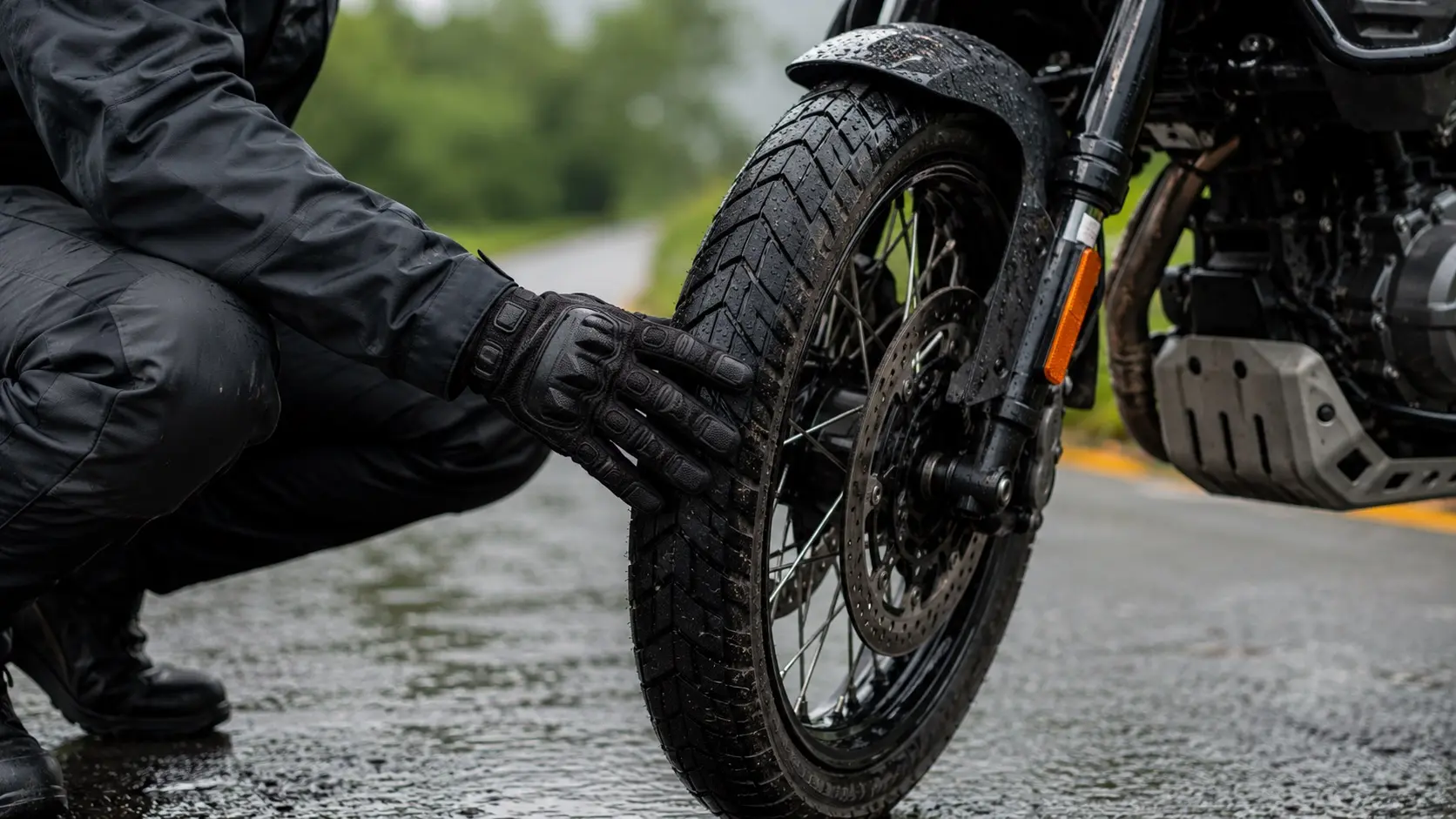
Tyres are the first thing you should inspect before monsoon season begins.
Worn tyres struggle to disperse water effectively, reducing grip and increasing braking distance. Even a powerful motorcycle becomes unpredictable when tyre traction drops on wet roads.
Check for:
- Sufficient tread depth
- Uneven wear patterns
- Sidewall cracks or damage
Tyre pressure also matters. Incorrect pressure reduces stability and affects water evacuation.
If your tyres are already nearing the end of their life, monsoon season is not the time to stretch them further.
Brakes and Brake Feel
Rain changes braking behavior immediately.
Water on discs and road surfaces reduces braking efficiency, especially during the first few moments after applying brakes.
Inspect:
- Brake pad thickness
- Brake fluid level
- Brake response and feel
Soft or inconsistent brake feel should never be ignored before monsoon riding.
Practice smooth braking inputs rather than sudden hard braking once the roads get wet.
Chain Cleaning and Lubrication
Rainwater washes away lubrication surprisingly quickly.
At the same time, wet roads throw dirt and grime directly onto the chain, creating an abrasive mixture that increases wear.
Before monsoon season:
- Clean the chain thoroughly
- Apply fresh lubricant
- Check chain slack and alignment
You may also need to lubricate more frequently during rainy weeks compared to dry weather riding.
Electrical Components and Battery
Electrical issues often appear during monsoon months because moisture exposes weak connections and aging components.
Inspect:
- Battery terminals
- Headlights and indicators
- Horn function
- Wiring near exposed areas
A weak battery that barely survives in summer may completely fail during repeated wet starts and traffic riding.
Modern motorcycles rely heavily on electronics, so small electrical issues should not be ignored.
Visibility and Rider Awareness
Monsoon riding is not only about the motorcycle. Visibility becomes one of the biggest safety concerns.
Check:
- Headlight brightness
- Brake light visibility
- Mirror positioning
Clean your visor regularly and ensure it remains scratch free. A scratched visor combined with rain and oncoming headlights can become dangerously distracting.
Suspension and Road Impact
Indian monsoon roads often hide potholes beneath standing water.
Inspect your suspension for:
- Oil leaks
- Excessive softness
- Unusual noises
A healthy suspension improves stability and reduces rider fatigue on rough roads.
Final Thoughts
Monsoon riding rewards preparation and punishes neglect.
You do not need to overthink maintenance, but you do need to pay attention before the rains arrive. Small inspections now can prevent breakdowns, poor handling, and unnecessary stress later.
A well prepared motorcycle feels calmer, safer, and more predictable when the weather becomes difficult.
That confidence matters every time the roads turn wet.