
The Unwritten Rules Of Group Riding In India
Understanding the social dynamics and shared responsibility that define group riding culture in India
Group riding looks simple from the outside. A few motorcycles, a shared destination, and a stretch of road ahead. But anyone who has ridden in a group knows there is much more happening beneath the surface.
There is a rhythm to it. A structure that is rarely spoken about, yet deeply understood. These are the unwritten rules of group riding. You do not learn them in a classroom. You pick them up on the road, often after making a few mistakes.
Riding Together Is Not Riding Alone
The biggest shift when you move from solo riding to group riding is responsibility.
When you ride alone, every decision affects only you. In a group, your actions influence everyone behind you. A sudden brake, an unpredictable lane change, or even inconsistent speed can ripple through the entire group.
Group riding is less about individual expression and more about collective flow.
Formation Is Not Just A Pattern
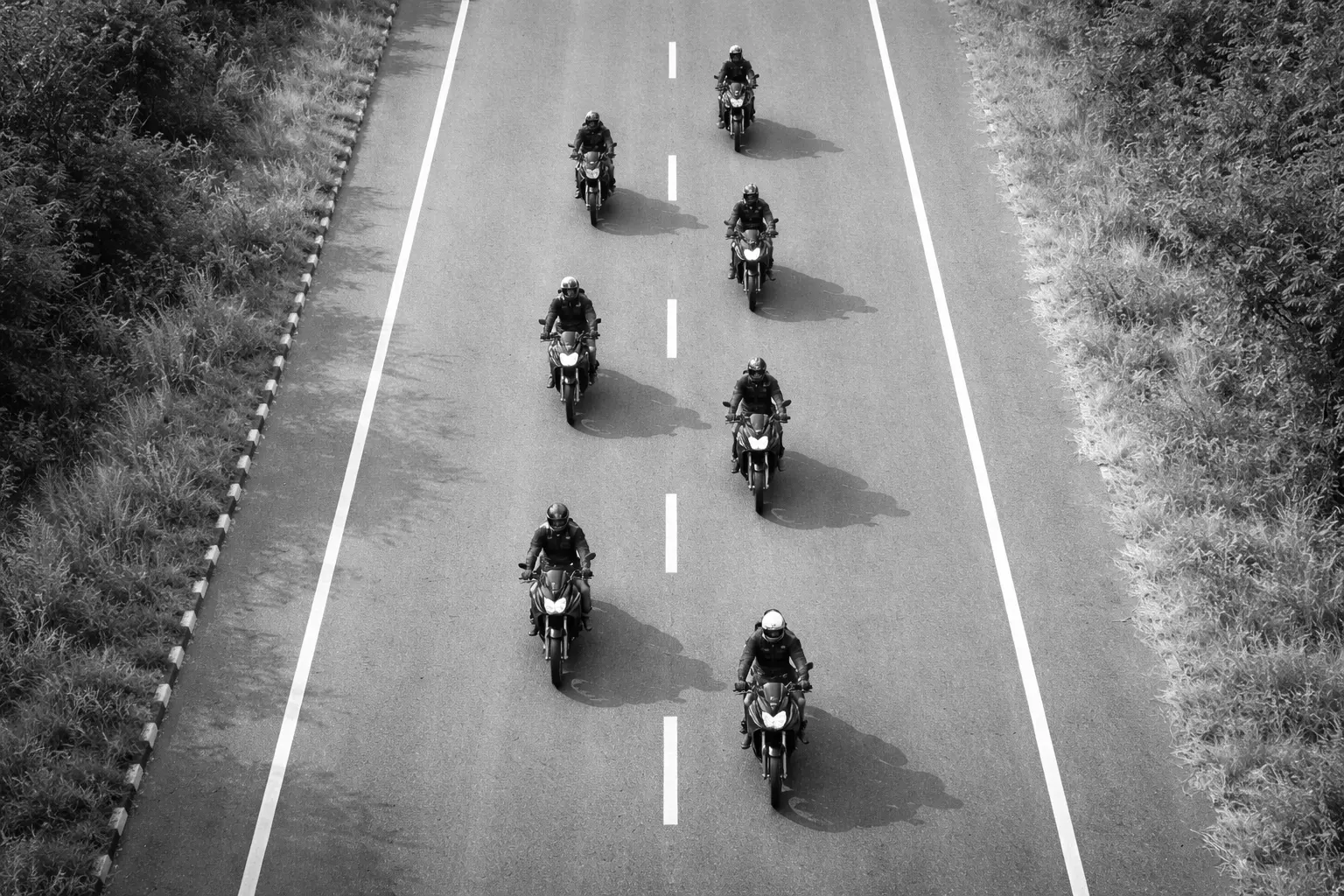
You will often hear riders talk about formations. Staggered, single file, or loose grouping. But these are not just visual patterns. They are functional.
A staggered formation allows better visibility and safe spacing. It gives each rider room to react while keeping the group compact.
Breaking formation without reason creates confusion. It forces others to adjust suddenly, increasing risk.
Understanding formation is less about memorizing positions and more about respecting space.
The Pace Of The Slowest Rider
One of the most important and often misunderstood rules is simple.
The group moves at the pace of the slowest rider.
This is not about limiting faster riders. It is about keeping the group intact and safe. Leaving a rider behind, even unintentionally, breaks the structure of the ride.
Experienced riders understand this. They adjust, not out of obligation, but out of respect.
Communication Without Words
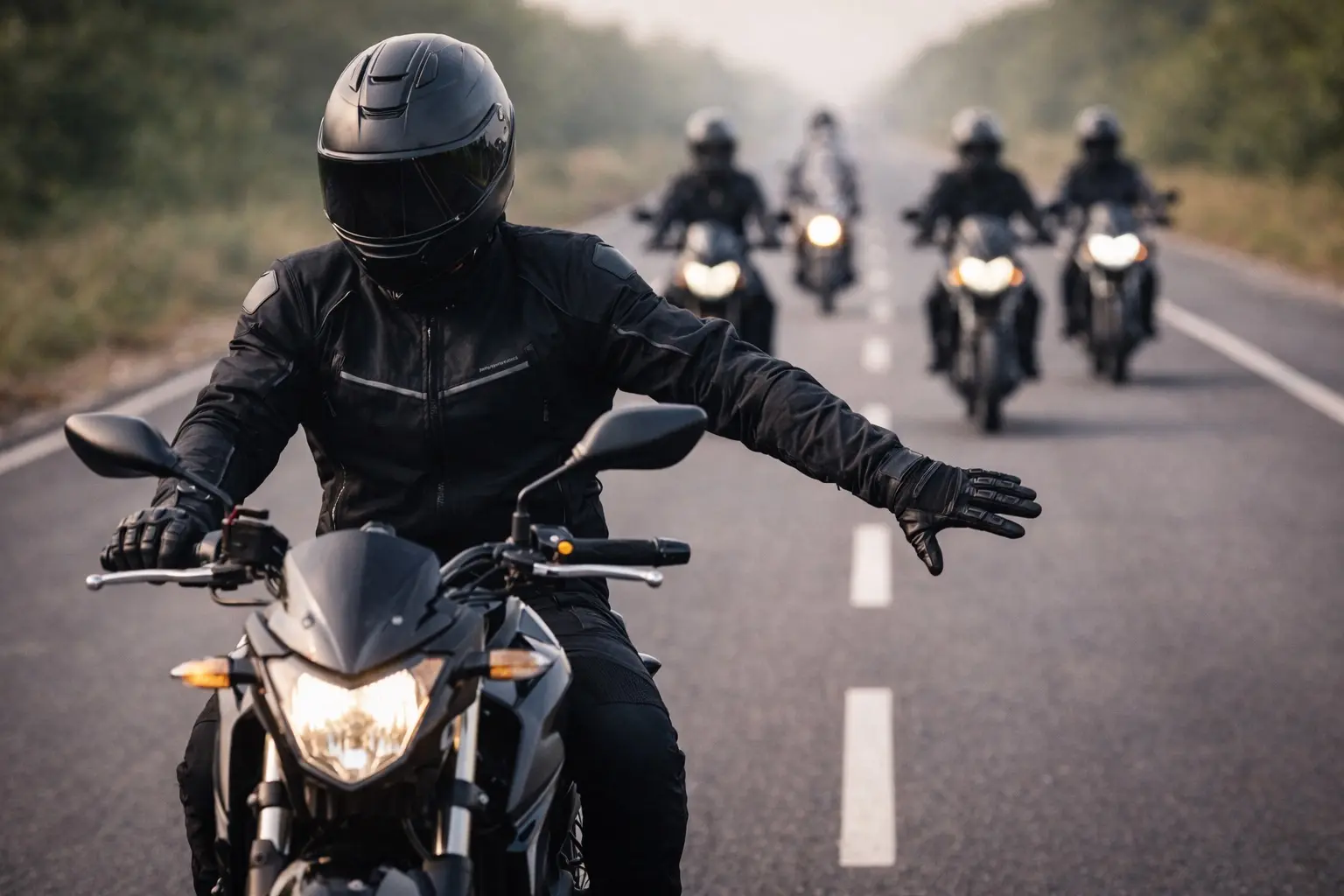
Group riding rarely involves constant verbal communication. Instead, it relies on signals, gestures, and awareness.
A hand signal to slow down. A foot pointing to a hazard on the road. A quick glance in the mirror to check if the rider behind is still there.
These small actions create a silent language that keeps the group connected.
Managing Ego On The Road
Group rides can sometimes bring out competitiveness. Faster riders may feel the urge to pull ahead. Others may try to keep up beyond their comfort zone.
This is where discipline matters.
A good group ride is not about proving speed or skill. It is about consistency, predictability, and trust. Riding beyond your limits or pressuring others to do so disrupts the balance.
Ego has no place in a well functioning group.
Stops And Regrouping
Breaks are not just for rest. They are part of the structure.
Planned stops help ensure that everyone stays together. They give riders a chance to check in, hydrate, and reset.
Even unplanned stops follow a pattern. If one rider pulls over, others notice and respond. No one is left alone without reason.
This sense of accountability defines strong riding groups.
The Role Of Experience
In most groups, experienced riders naturally take on certain roles. Leading the group, setting the pace, or riding at the rear to ensure no one gets left behind.
But experience is not about authority. It is about awareness.
Good leaders ride predictably. They make decisions that benefit the group, not just themselves.
Final Thoughts
The unwritten rules of group riding are not rigid laws. They are shared understandings built over time.
You learn them by riding, observing, and adapting.
When done right, group riding feels effortless. The bikes move together, the pace feels natural, and the road flows smoothly beneath you.
And in those moments, you realize that riding together is not just about reaching a destination.
It is about moving as one.