
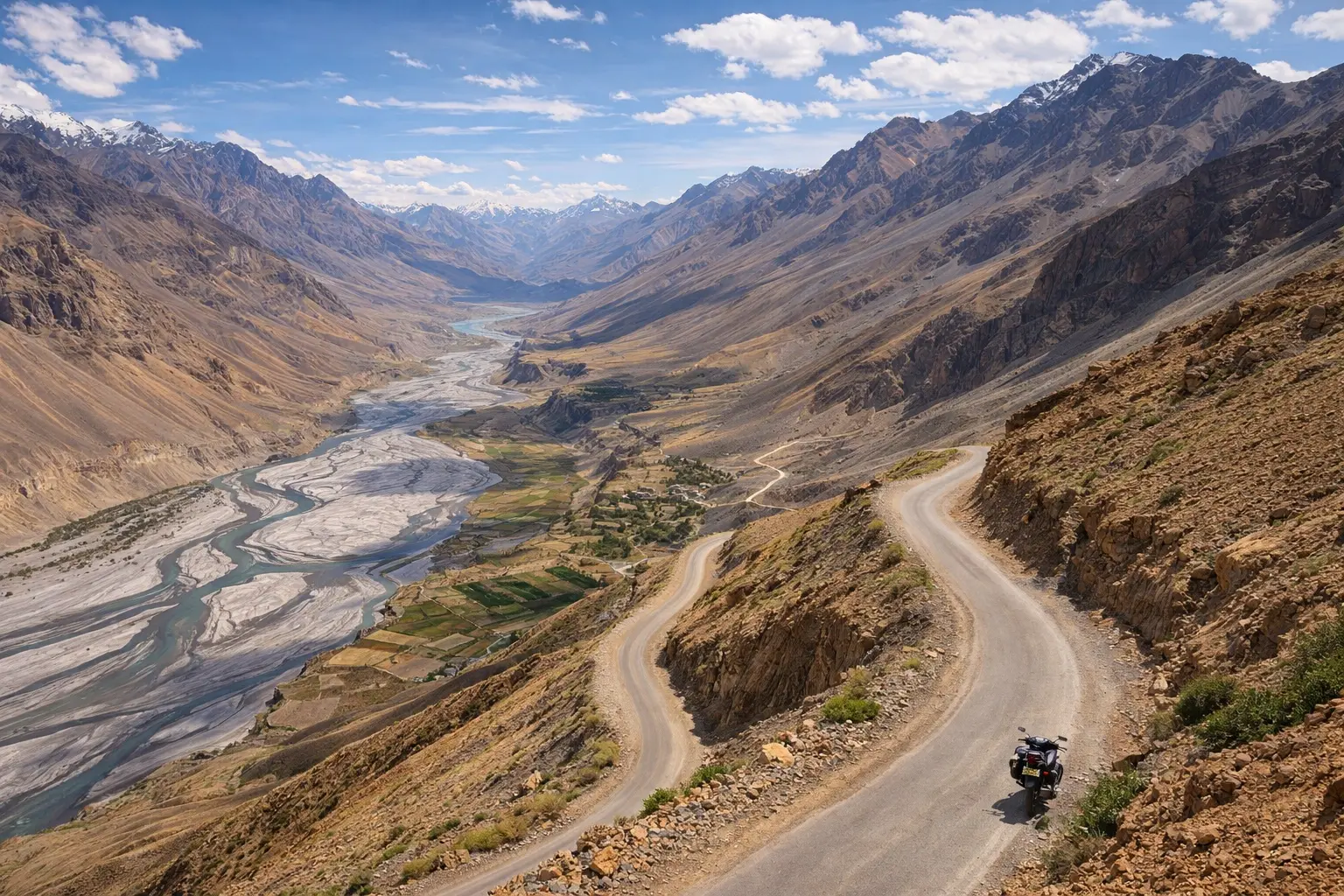
Spiti Valley Circuit Ride for Adventure Motorcyclists
A complete guide to riding the Spiti Valley circuit with practical tips route details and real rider insights
There are rides that test your machine, and then there are rides that test you. The Spiti Valley circuit firmly belongs in the second category.
This is not a highway cruise. It is a high altitude endurance ride through one of the most remote regions in India. If Ladakh feels like a destination, Spiti feels like a journey. It demands patience, preparation, and respect.
The Route Overview
The classic Spiti circuit runs as a loop:
Shimla → Narkanda → Kalpa → Tabo → Kaza → Kunzum Pass → Manali
This direction matters. Starting from Shimla allows gradual acclimatization, which is critical when riding above 3000 meters for extended periods.
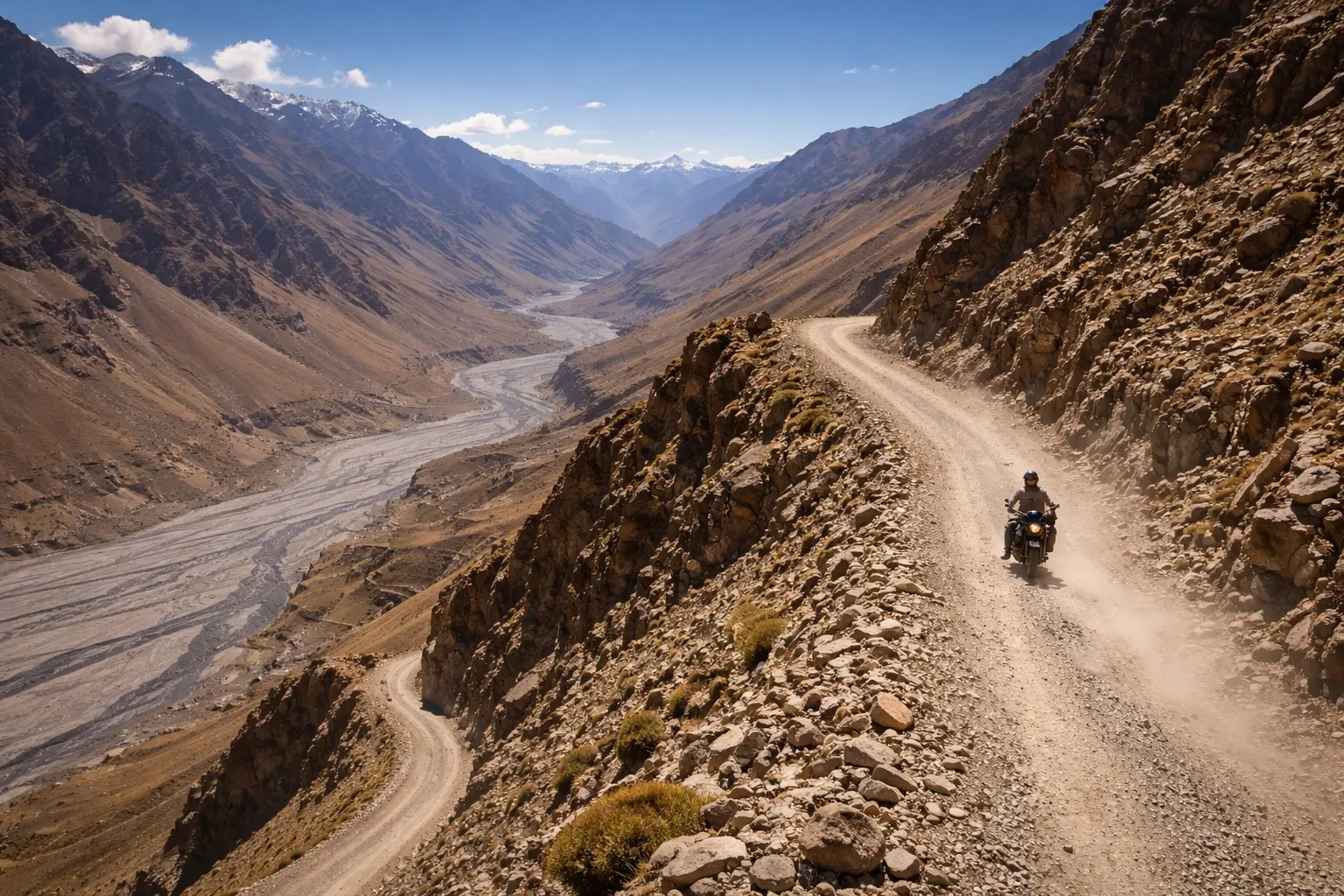
The terrain evolves constantly. Smooth tarmac near Shimla gives way to broken mountain roads, loose gravel, water crossings, and narrow cliffside sections. By the time you reach Kaza, you have already faced most of what Spiti can throw at you.
Road Conditions and Riding Reality
Let us be clear. This is not a comfortable ride.
The stretch between Khab and Nako is a mix of dust, broken patches, and sharp edges. From Tabo to Kaza, things improve slightly, but unpredictability remains. Post Kaza, especially towards Kunzum Pass, you will encounter slush, rocks, and sometimes snow depending on the season.
This is where bikes like the Royal Enfield Himalayan and KTM 390 Adventure make sense. Not because they are perfect, but because they are built for this kind of punishment.
The biggest mistake riders make here is rushing. Average speeds drop dramatically. A 150 km day can feel like a full expedition.
Altitude and Acclimatization
Spiti is not forgiving when it comes to altitude sickness.
You will be riding at elevations between 3000 and 4500 meters for days. Symptoms like headaches, nausea, and fatigue are common if you climb too fast.
The Shimla entry route helps, but you still need to pace yourself. Hydration, proper rest, and avoiding overexertion are critical.
Riding aggressively here is not just unnecessary, it is dangerous. Your reaction time slows down, and fatigue builds faster than you expect.
Fuel and Logistics
Fuel stops are limited. You will find petrol pumps at Reckong Peo and Kaza, but nothing reliable in between.
Carry extra fuel if your range is below 300 km. A small fuel canister is not optional here, it is essential.
Mobile networks are unreliable. BSNL works in patches, but do not depend on connectivity. Offline maps and basic route awareness go a long way.
Accommodation is available in most major stops like Kalpa, Tabo, and Kaza, but do not expect luxury. Expect basic rooms, simple food, and early nights.
Best Time to Ride
The ideal window is from June to September.
Before June, snow blocks the high passes. After September, temperatures drop sharply and conditions become unpredictable.
Even in peak season, weather can change quickly. A clear morning can turn into a dusty storm or a freezing evening within hours.
Riding Technique Matters
Spiti rewards smooth riding.
Stand on the pegs over rough sections. Maintain momentum through gravel. Avoid sudden braking on loose surfaces.
Water crossings require commitment. Pick a line, maintain steady throttle, and do not panic mid crossing.
More importantly, ride within your limits. This is not the place to prove anything.
Why Spiti Stays With You
There is a moment somewhere between Tabo and Kaza when the noise fades.
No traffic, no cities, no distractions. Just you, your motorcycle, and a landscape that feels almost unreal.
That is the real reward of Spiti. Not the challenge, but the silence that follows it.
Final Thoughts
The Spiti Valley circuit is not for everyone, and that is exactly why it matters.
It strips riding down to its basics. Control, awareness, endurance.
If you prepare well, respect the terrain, and ride smart, Spiti will give you one of the most honest motorcycling experiences in India.
Just do not expect it to be easy. That is the whole point.