
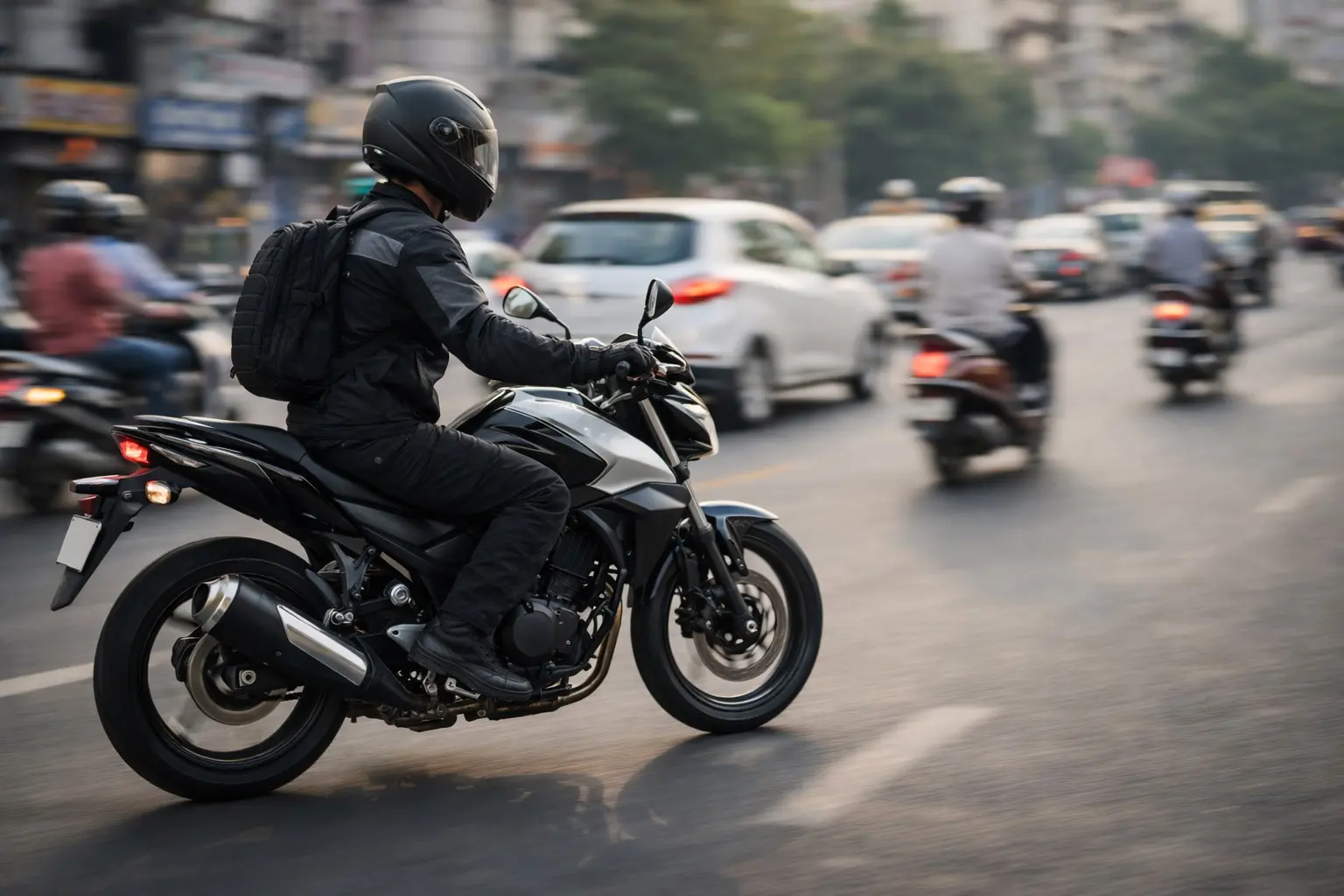
Smooth Braking Techniques for Safer Riding in City Traffic
Learn smooth braking techniques for safer riding in busy city traffic conditions
Most riders do not realize how rough their braking is until it becomes a problem. The bike dives forward, the suspension compresses suddenly, and control feels shaky. In city traffic, this is not just uncomfortable. It is risky.
Smooth braking is one of the most important skills you can develop as a rider. It improves control, reduces fatigue, and most importantly, gives you more time and stability when things go wrong.
Why Most Riders Brake Poorly
The common mistake is simple. Riders treat brakes like an on off switch.
They grab the front brake suddenly, rely too much on the rear, or brake too late and too hard. In slow moving traffic, this leads to jerky movement. At higher speeds, it can lead to loss of grip or panic situations.
Smooth braking is about control. It is not about stopping fast. It is about stopping safely and predictably.
Understanding Brake Balance
Your motorcycle has two brakes, and both serve a purpose.
- The front brake provides most of the stopping power
- The rear brake stabilizes the bike
In city riding, you should use both, but with awareness.
A common pattern:
- Light rear brake to settle the bike
- Progressive front brake to slow down
If you rely only on the rear brake, stopping distances increase. If you grab only the front brake suddenly, the bike becomes unstable.
The goal is balance.
Progressive Braking Explained
Smooth braking is all about how you apply pressure.
Think of it in three stages:
1. Initial Contact
Gently apply the brake. This settles the suspension.
2. Build Pressure
Gradually increase braking force as the front suspension compresses.
3. Ease Off
As the bike slows down, reduce pressure smoothly to avoid a sudden stop.
Most riders skip the first stage. That is why braking feels abrupt.
Progressive braking keeps the tires planted and the bike stable.
Real World City Scenarios
City riding in India is unpredictable. You deal with:
- Sudden pedestrians
- Auto rickshaws cutting across
- Cars braking without warning
- Potholes and uneven surfaces
In these situations, smooth braking gives you options.
Instead of reacting late and hard, you are already controlling speed early. This reduces panic and gives you more time to adjust.
Using Engine Braking Effectively
Braking is not just about the brake lever.
Rolling off the throttle naturally slows the bike. Downshifting adds controlled deceleration.
Use this to your advantage.
- Roll off early when approaching traffic
- Downshift smoothly
- Use brakes to fine tune speed
This reduces load on the brakes and makes your riding more fluid.
Common Mistakes to Avoid
Grabbing the Front Brake
This causes sudden weight transfer and instability.
Ignoring the Rear Brake
You lose stability and smoothness.
Braking Too Late
This leads to panic braking and poor control.
Looking Down
Always keep your eyes ahead. Vision controls reaction.
Fix these, and your braking will improve immediately.
Practice Drills You Can Try
You do not improve braking by reading. You improve by doing.
Find an empty stretch of road or a parking area and try this:
Drill 1
Ride at a steady speed and practice stopping smoothly using progressive braking.
Drill 2
Use both brakes and focus on balance. Feel how the bike responds.
Drill 3
Practice slowing down early instead of braking late.
These simple drills build muscle memory.
Final Thoughts
Smooth braking is not flashy. It is not exciting. But it is one of the most important skills you can develop.
It makes your ride calmer, safer, and more controlled. In city traffic, where unpredictability is constant, this skill becomes your biggest advantage.
Fix your braking, and everything else in your riding starts to improve.