
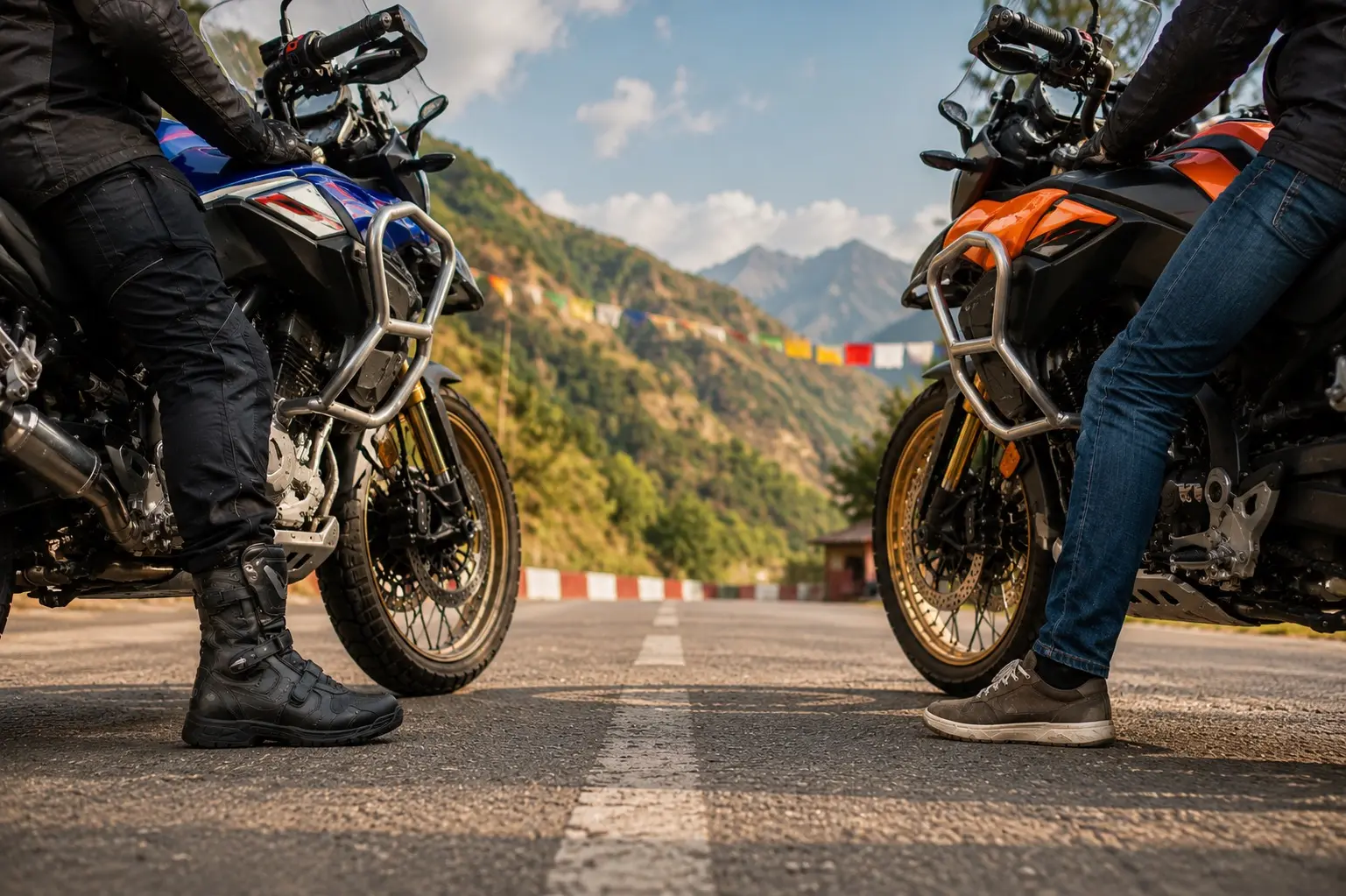
Riding Boots vs Regular Shoes
Understand the difference between riding boots and regular shoes for motorcycle safety
Foot protection is one of the most overlooked parts of motorcycle riding gear. Many riders invest in helmets and jackets, but continue riding in sneakers, casual shoes, or even sandals.
Usually, the reasoning feels practical. Riding boots seem expensive, bulky, or uncomfortable for daily use.
But the difference between riding boots and regular shoes becomes very clear the moment something goes wrong.
This article looks at the real-world differences between the two and explains why proper footwear matters more than many riders realize.
Why Foot Protection Matters
When riders think about motorcycle safety, they usually focus on:
- Head injuries
- Upper body protection
- Gloves and helmets
Feet and ankles are often ignored.
But in a fall or slide, your lower body is highly vulnerable to:
- Impact injuries
- Abrasion
- Twisting and ankle damage
- Crushing from the motorcycle
Regular shoes are simply not designed for these situations.
The Problem with Regular Shoes
Casual shoes prioritize:
- Comfort
- Flexibility
- Lightweight construction
That works well for walking, but not for motorcycle riding.
Most regular shoes:
- Have soft soles
- Offer little ankle support
- Tear easily during abrasion
- Provide almost no impact protection
Even sturdy sneakers can fail quickly in a slide.
What Makes Riding Boots Different
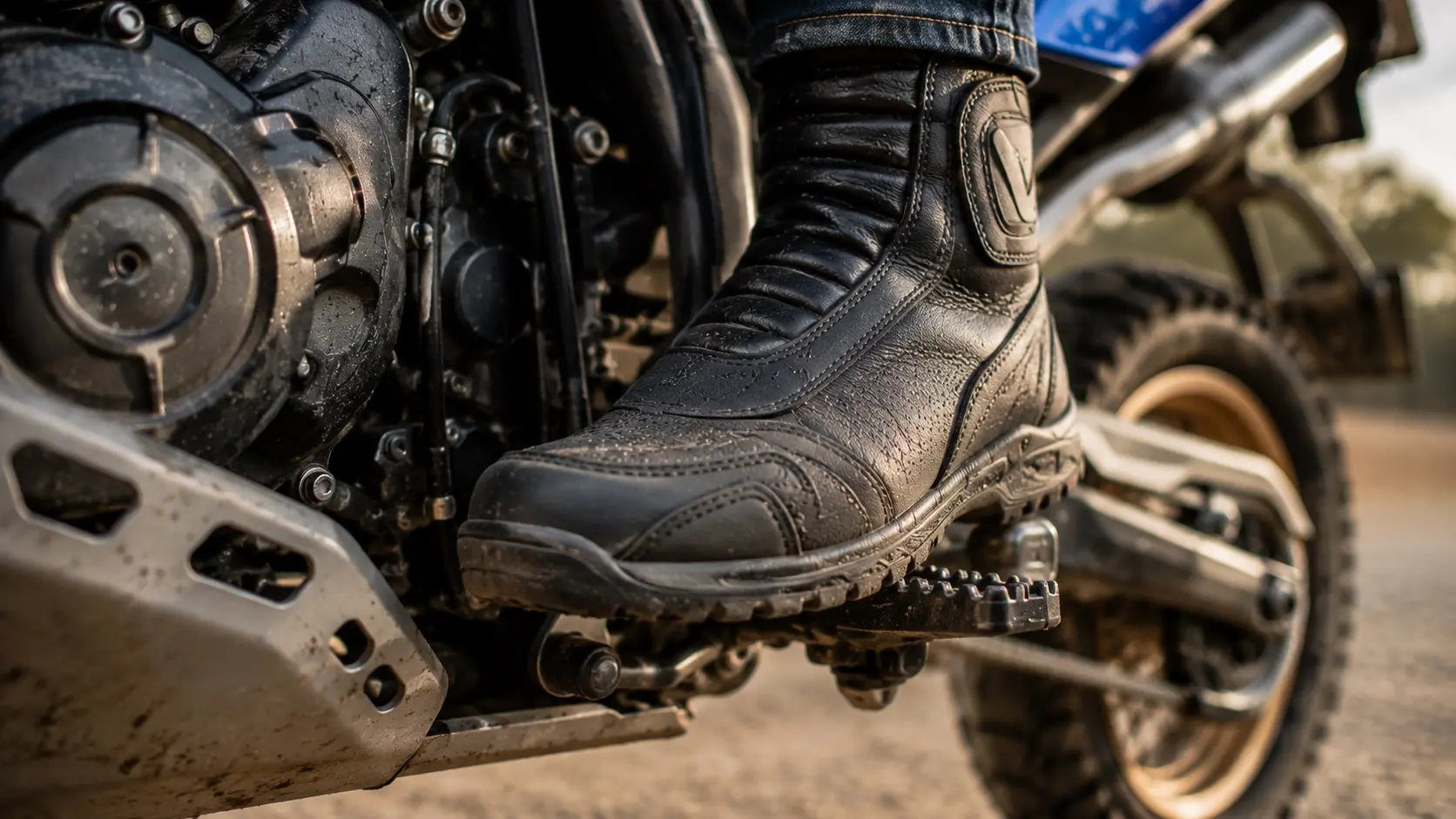
Motorcycle boots are specifically designed for riding conditions.
Key differences include:
- Reinforced ankle protection
- Stronger sole construction
- Abrasion resistant materials
- Better grip on foot pegs
- Protection around heel and toe areas
The goal is not just comfort. It is controlled protection during impact and movement.
Ankle Support Changes Everything
One of the biggest differences is ankle stability.
Regular shoes allow:
- Excessive twisting
- Weak side support
Riding boots reduce this risk significantly.
This matters because ankle injuries are extremely common in motorcycle accidents, including low-speed falls.
Grip and Control on the Motorcycle
Riding boots also improve control.
Proper riding boots:
- Grip foot pegs better
- Feel more stable while braking or shifting
- Reduce foot fatigue on long rides
This becomes especially noticeable during:
- Rainy conditions
- Touring rides
- Off-road or rough roads
City Riding vs Touring Needs
Not every rider needs heavy adventure boots.
City Riding
For commuting:
- Lightweight riding shoes or urban riding boots work well
- Comfort and flexibility matter more
Modern riding shoes often look casual while still offering:
- Ankle protection
- Reinforced soles
- Better abrasion resistance
Touring and Highway Riding
For longer rides:
- Taller boots offer better protection
- More support reduces fatigue
- Weather resistance becomes useful
Adventure touring boots also help during rough terrain and unpredictable road conditions.
Heat and Comfort Concerns
This is where many Indian riders hesitate.
Yes, some riding boots feel warm or bulky in traffic.
But modern riding footwear has improved significantly:
- Better ventilation
- Lighter materials
- More flexible designs
The key is choosing boots suited to your riding style rather than assuming all riding boots are uncomfortable.
Common Mistakes Riders Make
- Riding in sneakers for long highway rides
- Using sandals in traffic
- Prioritizing style over protection
- Buying boots that are too stiff or uncomfortable
Another common mistake is buying racing boots for daily commuting. They often provide more protection than needed while sacrificing comfort.
Budget Options Are Better Than No Protection
You do not need premium racing boots to improve safety.
Even entry-level riding shoes from brands like Rynox or Viaterra provide:
- Better ankle support
- Stronger construction
- More protection than casual footwear
The difference in protection is substantial.
Real World Perspective
Many riders only understand the value of riding boots after:
- A slip at a traffic signal
- A foot trapped under the bike
- A minor fall during slow riding
Even low-speed accidents can injure feet and ankles badly when wearing casual shoes.
Good riding footwear reduces those risks dramatically.
Balancing Practicality and Safety
This is where realistic riding matters.
If you commute daily in heavy traffic:
- Lightweight riding shoes may be ideal
If you tour regularly:
- Full riding boots make more sense
There is no single perfect answer. The goal is choosing protection that fits your riding life.
Final Thoughts
Riding boots are not about looking professional or adventurous. They exist because motorcycle riding exposes your feet and ankles to serious risk.
Regular shoes may feel convenient, but they are not designed for crashes, abrasion, or motorcycle control.
The best riding footwear is the one that balances:
- Protection
- Comfort
- Practical daily usability
Because gear only works when riders are willing to wear it consistently.