
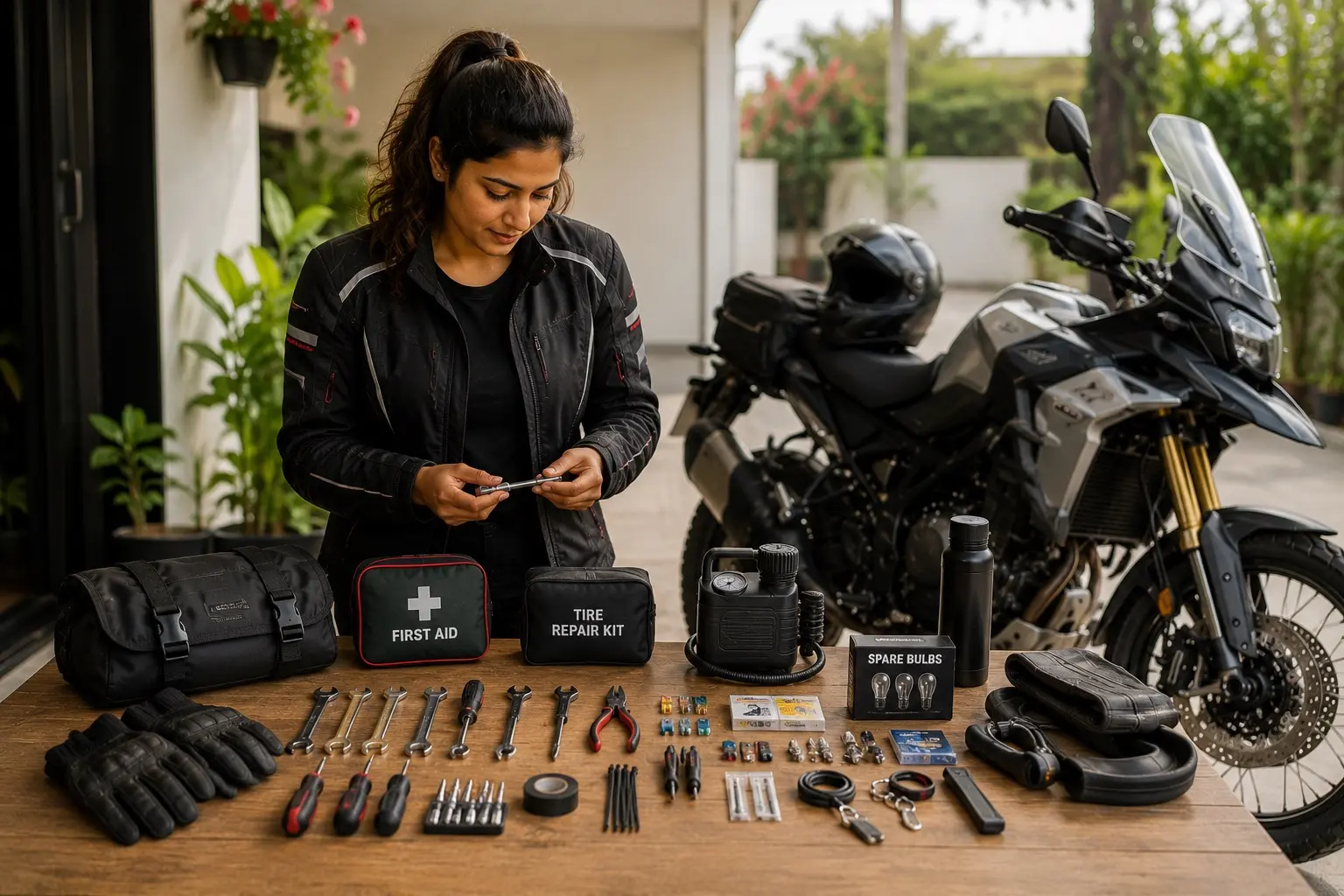
Essential Tools and Spares For Motorcycle Touring in India
A practical guide to motorcycle touring tools and spares that help riders handle breakdowns and roadside issues
Motorcycle touring in India teaches you one thing very quickly. You cannot always depend on help arriving when you need it.
Remote highways, mountain roads, bad weather, and late night breakdowns are all part of the experience. Carrying the right tools and spares does not make you paranoid. It makes you prepared.
The goal is not to carry an entire workshop. It is to carry enough to solve the most common problems.
Start With Basic Tools
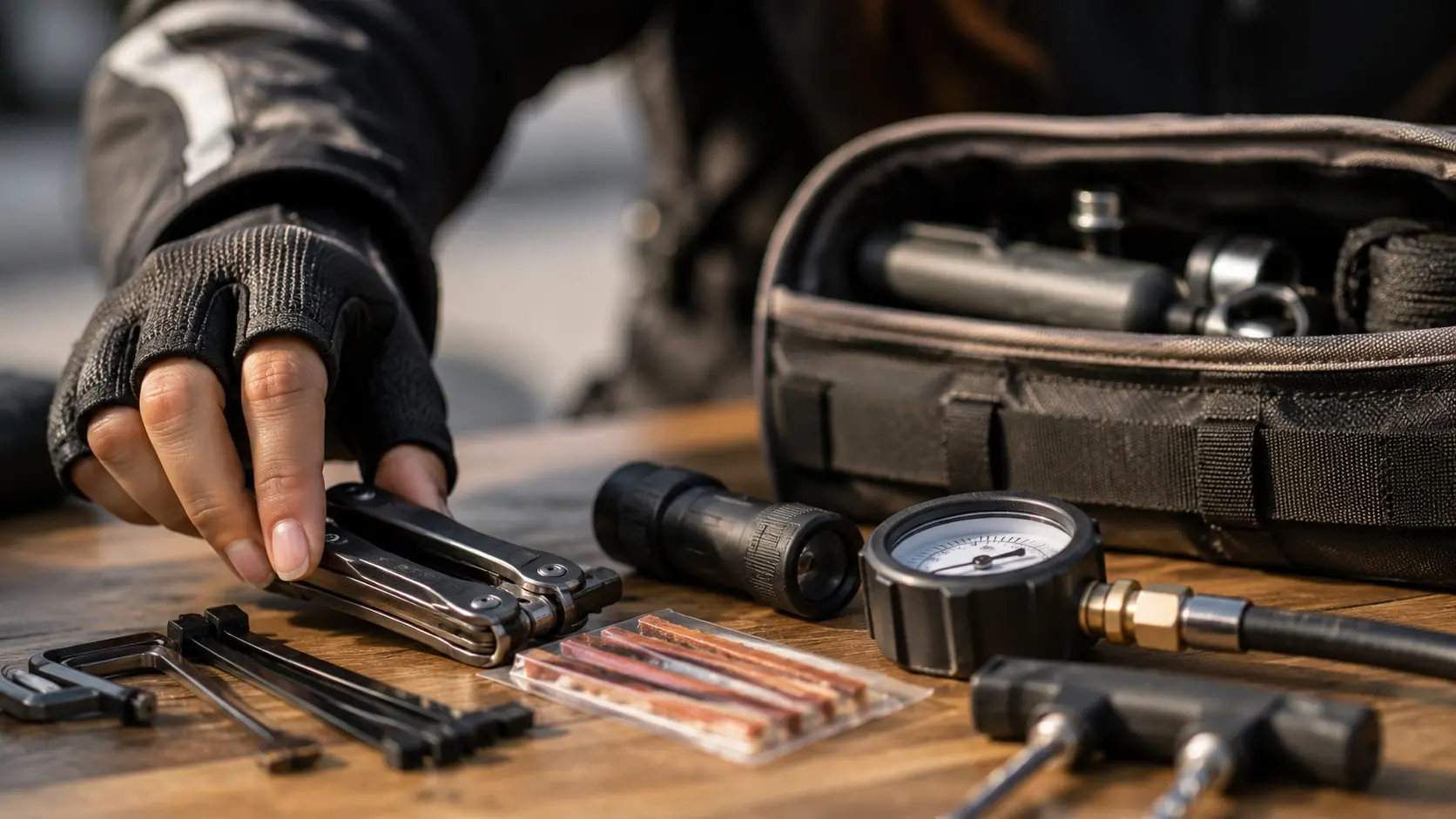
Every touring motorcycle should carry a compact tool kit.
Basic essentials:
- Allen keys
- Screwdrivers
- Pliers
- Adjustable spanner
- Electrical tape
Most stock motorcycle tool kits are too basic for real touring. Upgrading your kit is one of the smartest things you can do before longer rides.
Tire Repair Equipment Is Critical
Flat tires are one of the most common touring problems.
For tubeless tires:
- Puncture plug kit
- Portable inflator
- Tire pressure gauge
For tube tire motorcycles:
- Spare tube
- Tire levers
- Portable inflator or compact foot pump
This equipment can turn a major delay into a quick roadside stop.
Chain Maintenance Supplies
Long distance rides put serious stress on motorcycle chains.
Carry:
- Small chain lube can
- Cleaning cloth
- Compact brush if possible
A neglected chain can quickly become noisy and rough, especially during dusty or rainy rides.
Electrical Spares You Should Carry
Electrical failures are frustrating because they often appear suddenly.
Useful items include:
- Spare fuses
- Zip ties
- Small flashlight
- Charging cable for your phone
These take very little space but can solve surprisingly common problems.
Emergency Fuel and Hydration Planning
Indian highways are unpredictable.
Some stretches may have:
- Long gaps between fuel stations
- Closed pumps late at night
- Remote mountain roads
A small emergency fuel bottle can be useful for remote rides. Hydration matters just as much.
Packing Tools Properly
Tools should stay accessible.
Do not bury your puncture kit under clothes and luggage. If you get stranded in rain, you will regret it immediately.
Good storage options:
- Tail bag organizer
- Tool roll
- Tank bag pockets
Many touring riders eventually develop their own system over time.
Do Not Overpack
This is important.
New touring riders often carry far too much.
You do not need:
- Heavy workshop tools
- Large spare parts
- Excessive duplicate items
The goal is efficiency, not carrying unnecessary weight.
Learn Basic Repairs Before Touring
Carrying tools without knowing how to use them is only half useful.
At minimum, learn:
- Basic puncture repair
- Chain adjustment
- Fuse replacement
- Battery terminal checks
These skills build confidence and reduce panic during breakdowns.
Real World Touring Insight
Experienced riders rarely carry flashy equipment. Most focus on reliability and practicality.
A simple puncture kit, inflator, zip ties, and a few tools solve the majority of roadside problems.
Preparation matters more than expensive gear.
Final Thoughts
Motorcycle touring becomes far less stressful when you are properly prepared.
The right tools and spares will not prevent every problem, but they can turn a ruined day into a manageable delay.
And once you solve your first roadside issue yourself, your confidence as a touring rider changes completely.