
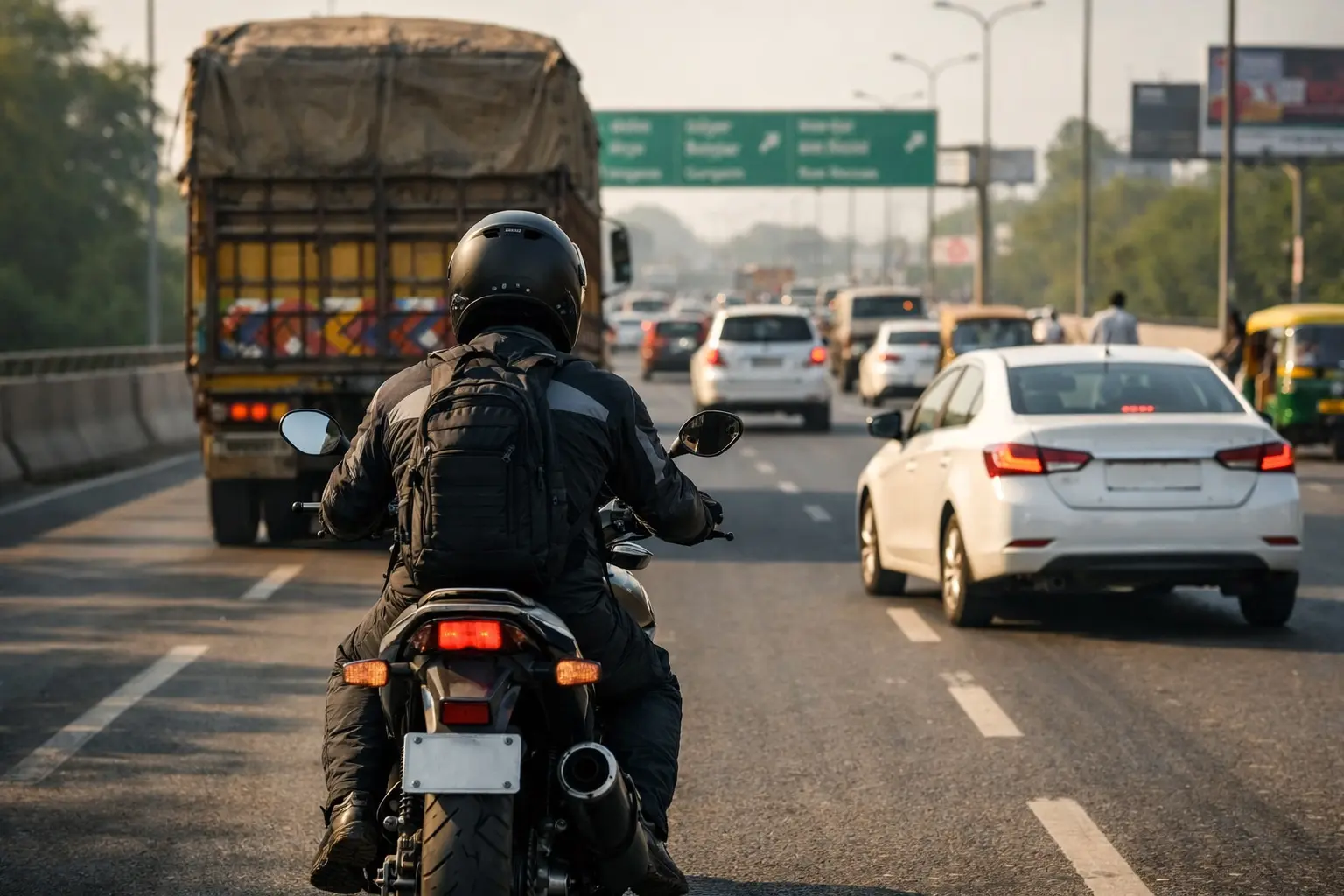
Defensive Riding Techniques for Indian Highways
Learn defensive riding techniques to stay safe on unpredictable Indian highways
Highways look simple. Long straight roads, higher speeds, and fewer stops. But in India, highways are anything but predictable.
You are not just riding your bike. You are constantly reading the road, traffic, and behavior of others. Defensive riding is what keeps you safe when things do not go as expected.
What Defensive Riding Really Means
Defensive riding is not about riding slow.
It is about riding smart.
You assume that:
- Other road users will make mistakes
- Situations will change suddenly
- You need a backup plan
This mindset changes everything about how you ride.
Reading the Road Ahead
Your eyes are your biggest safety tool.
Look far ahead, not just at the vehicle in front of you.
Watch for:
- Brake lights in the distance
- Vehicles changing lanes
- People or animals near the road
- Road surface changes
The earlier you see a problem, the smoother your response.
Maintaining a Safety Buffer
One of the biggest mistakes riders make is riding too close.
You need space.
- Maintain distance from the vehicle ahead
- Avoid riding in blind spots
- Keep space on at least one side
This space is your escape route.
If something goes wrong, you already have room to react.
Positioning on the Road
Where you ride in your lane matters.
Do not just sit in the center all the time.
Adjust based on:
- Traffic flow
- Road condition
- Visibility
For example:
- Move slightly to one side to improve visibility
- Avoid areas with oil or debris
- Position yourself where others can see you
Good positioning reduces risk without changing speed.
Anticipating Unpredictable Behavior
Indian highways are full of surprises.
- Vehicles entering from wrong sides
- Sudden U turns
- Slow moving trucks in fast lanes
- Pedestrians crossing anywhere
You cannot control them. But you can anticipate them.
Ask yourself constantly:
What could go wrong here
This habit keeps you alert without making you anxious.
Speed Management
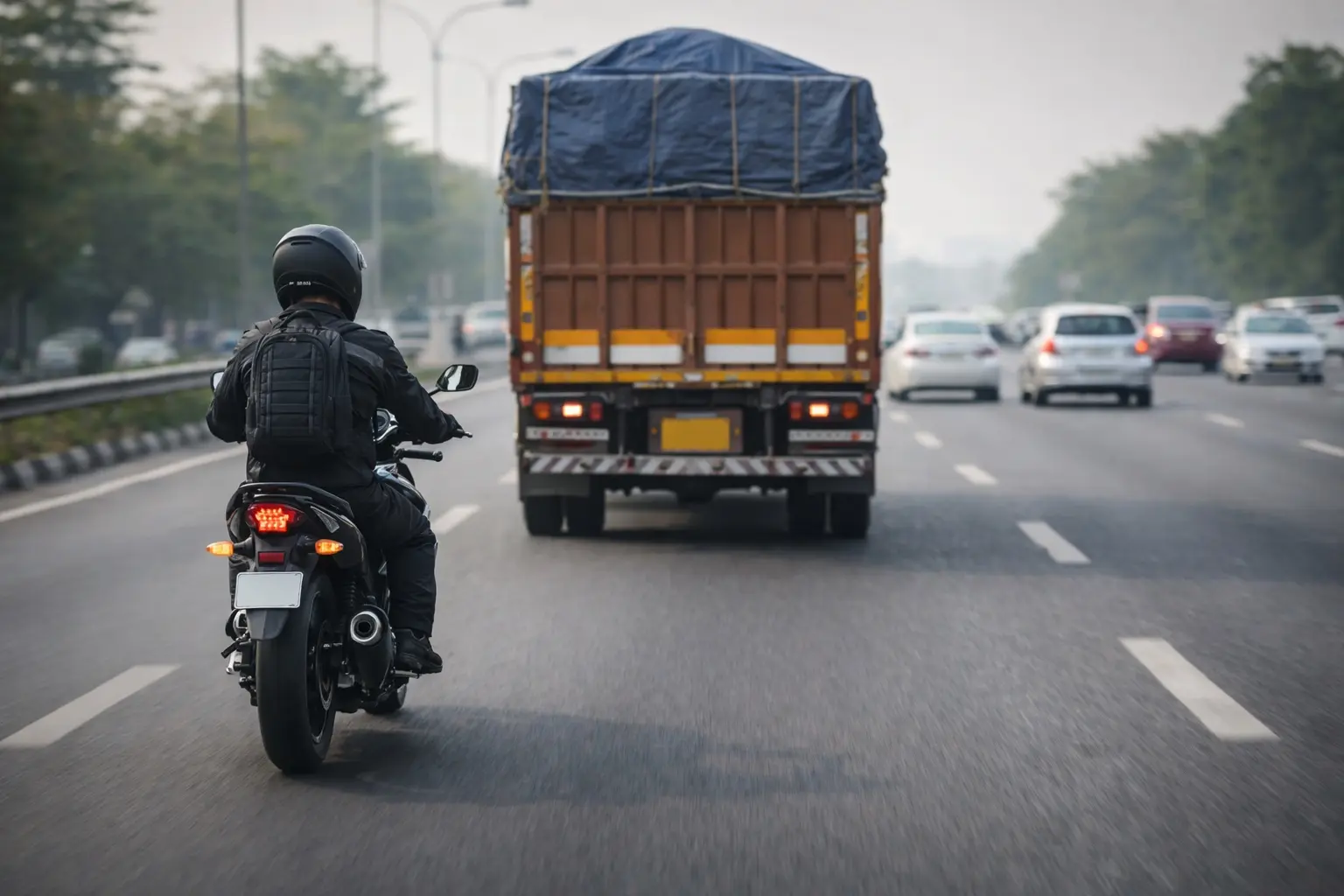
Speed is not just about how fast you go.
It is about whether you can handle what happens next.
Ride at a speed where:
- You can stop safely within visible distance
- You have time to react
- You feel in control
If visibility drops or traffic gets unpredictable, reduce speed early.
Overtaking with Awareness
Overtaking is where many riders get into trouble.
Do it with a plan.
- Check mirrors and blind spots
- Ensure clear visibility ahead
- Avoid overtaking near curves or intersections
- Complete the move decisively
Half hearted overtakes are dangerous.
Be clear, smooth, and predictable.
Managing Fatigue on Long Rides
Defensive riding is not just physical. It is mental.
On long highway rides:
- Take regular breaks
- Stay hydrated
- Watch for signs of fatigue
When your focus drops, your reaction time increases.
That is when mistakes happen.
Building the Right Mindset
The biggest shift is mental.
Stop thinking: I am in control
Start thinking: I am responsible for my safety
This mindset keeps you alert, aware, and prepared.
Final Thoughts
Defensive riding is not a technique you switch on and off.
It is a way of riding.
On Indian highways, where unpredictability is part of the environment, this skill becomes essential. It keeps you one step ahead, reduces risk, and gives you confidence without overconfidence.
Ride like everything can go wrong, and you will be ready when something does.